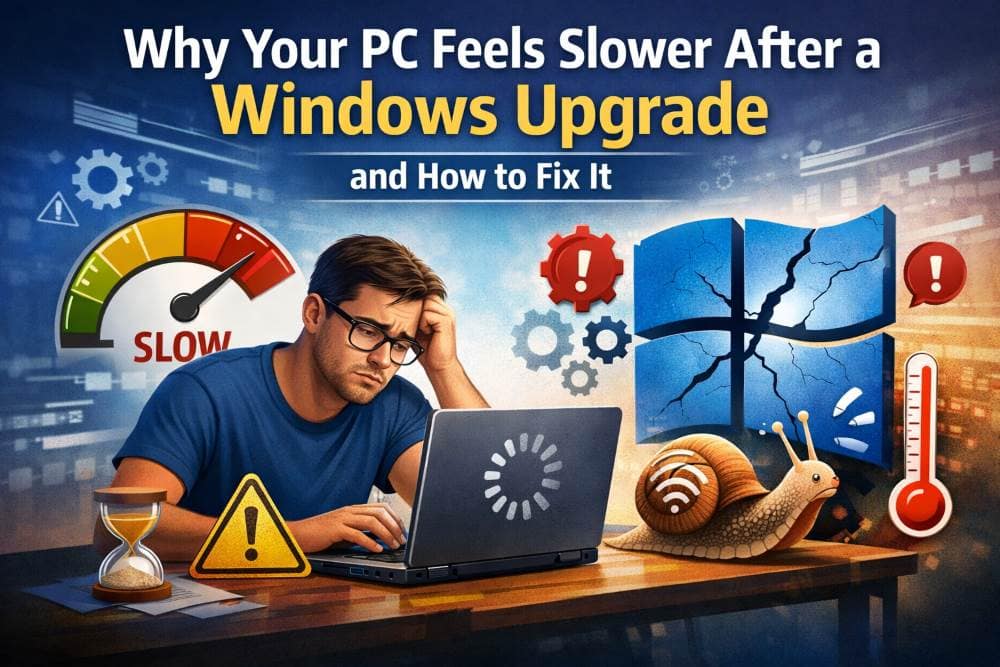
Most users experience a PC slow after the Windows 11 update, even if the PC was running perfectly before the update. Even the simplest tasks such as opening a folder, running an application, or surfing the internet take longer than usual. For some users, the computer is so slow after the Windows 11 update that it becomes frustrating to perform daily tasks.
If you are wondering “why is my PC slow after Windows 11 update” or “why is my PC slow after Windows 11 update,” you are not alone. Windows 11 updates come with new features, background processes, and graphics that can slow down the computer if it is not optimized.
This blog post will help you understand why your computer is slow after a Windows 11 update, the signs to look out for, and how to resolve the problem.
What Happens When a PC Slow After Windows 11 Update?
If PC slow after Windows 11 update, it means that the system is struggling to respond quickly. You may experience delays when performing your normal tasks. In most cases, users complain that their computers are really slow after the Windows 11 update, yet the hardware is decent.
If the computer is slow for a few days, it means that something needs to be addressed.
Why Is My PC Slow After Windows 11 Update?
Many users ask, “Why is my PC slow after the Windows 11 update?
The following are the most common and important reasons why your computer may be slow after the Windows 11 update:
1. Background Optimization Processes
After the update, Windows 11 performs activities such as system indexing, file optimization, and synchronization. These background processes consume CPU and disk resources, causing your computer to be slow after the Windows 11 update, especially in the first few days.
2. Too Many Startup Applications
Windows updates can automatically turn on startup programs. When there are too many applications set to start at boot, the computer takes longer to start and becomes sluggish.
3. Driver Compatibility Issues
Incompatible drivers are one of the most common causes of a slow computer after the Windows 11 upgrade. Incompatible graphics, storage, or chipset drivers can cause performance issues with Windows 11.
4. High CPU, RAM, or Disk Usage
Windows 11 consumes more system resources because of visual effects, widgets, and background processes. In older computers, this can cause a slowdown.
5. Insufficient Free Storage
When the system drive is almost full, Windows cannot handle temporary files effectively, causing the computer to be slow after the Windows 11 update.
Symptoms: Computer Running Slow After Windows 11 Update
If your computer is experiencing the following symptoms, then your computer is running slow after Windows 11 update:
- Slow startup and shutdown
- Applications opening late
- Frequent freezing or stuttering
- CPU or disk usage is very high in Task Manager, making the PC run slow.
- Delayed response to mouse or keyboard input
Windows 11 Slow After Update Fix (Step-by-Step)
Here are some effective and safe solutions that you can try:
Fix 1: Restart and Allow the System to Settle
After the update, you can restart your computer and let the system settle for a while. This will solve the temporary slowness issue for most users.
Fix 2: Disable Unnecessary Startup Programs
This will help if your computer is running very slow after the Windows 11 update, especially during the startup process.
Fix 3: Update All Drivers
Updating the drivers to the latest version can help with compatibility and performance, especially after a big Windows update.
Fix 4: Adjust Performance Settings
Turning off unnecessary graphics settings can help a lot if your computer is running slowly after the Windows 11 update, especially if it’s an older computer.
Fix 5: Install Pending Windows Updates
Microsoft usually rolls out performance updates after a big Windows update. Installing these updates can resolve performance lag.
Fix 6: Free Up Disk Space
Deleting temporary files and unnecessary apps helps make the system respond better after the Windows 11 update or upgrade.
If your PC is slow after Windows 11 update and basic fixes are not working, WinTech Support is here to help. Our experienced technicians specialize in diagnosing and fixing performance issues caused by Windows updates, driver conflicts, and system misconfigurations.
My PC Slow After Windows 11 Update – Is This Normal?
Yes, in most instances, it is normal for a short while. But if PC slow after Windows 11 update for more than a few days, it means that optimization is needed.
Why Is My Computer So Slow After Windows 11 Update on Older PCs?
Older PCs may not be able to process Windows 11’s resource needs. Older RAM, old hard drives, or outdated hardware may lead to long-term performance problems after an update.
PC Slow After Windows 11 Upgrade vs Update
A PC slow after Windows 11 upgrade will require more adjustments compared to a computer slow after a small update. Upgrading involves changing the underlying system components.
Frequently Asked Questions (FAQs)
Q1. Why is my PC slow after Windows 11 update?
Your PC may feel slow after a Windows 11 update because of background optimization tasks, increased system resource usage, outdated drivers, or too many startup programs running at once. These issues are common after major updates.
Q2. Is it normal for Windows 11 to be slow after an update?
Yes, it is normal for Windows 11 to run slow for a short time after an update. The system performs indexing, syncing, and background processes. However, if the slowdown continues for several days, optimization is required.
Q3 Why is my computer really slow after Windows 11 update?
If your computer is really slow after a Windows 11 update, it could be due to incompatible drivers, insufficient RAM, low disk space, or hardware that struggles with Windows 11’s performance requirements.
Conclusion
A PC slow after Windows 11 update can be quite frustrating, but the problem can be easily resolved with the right optimization. No matter whether your computer is slow after the Windows 11 update, your computer is really slow after the Windows 11 update, or my PC slow after Windows 11 update, the right solutions can help. Updating drivers, controlling startup programs, and ensuring there is sufficient free space on the hard drive are essential for a smooth Windows 11 experience.