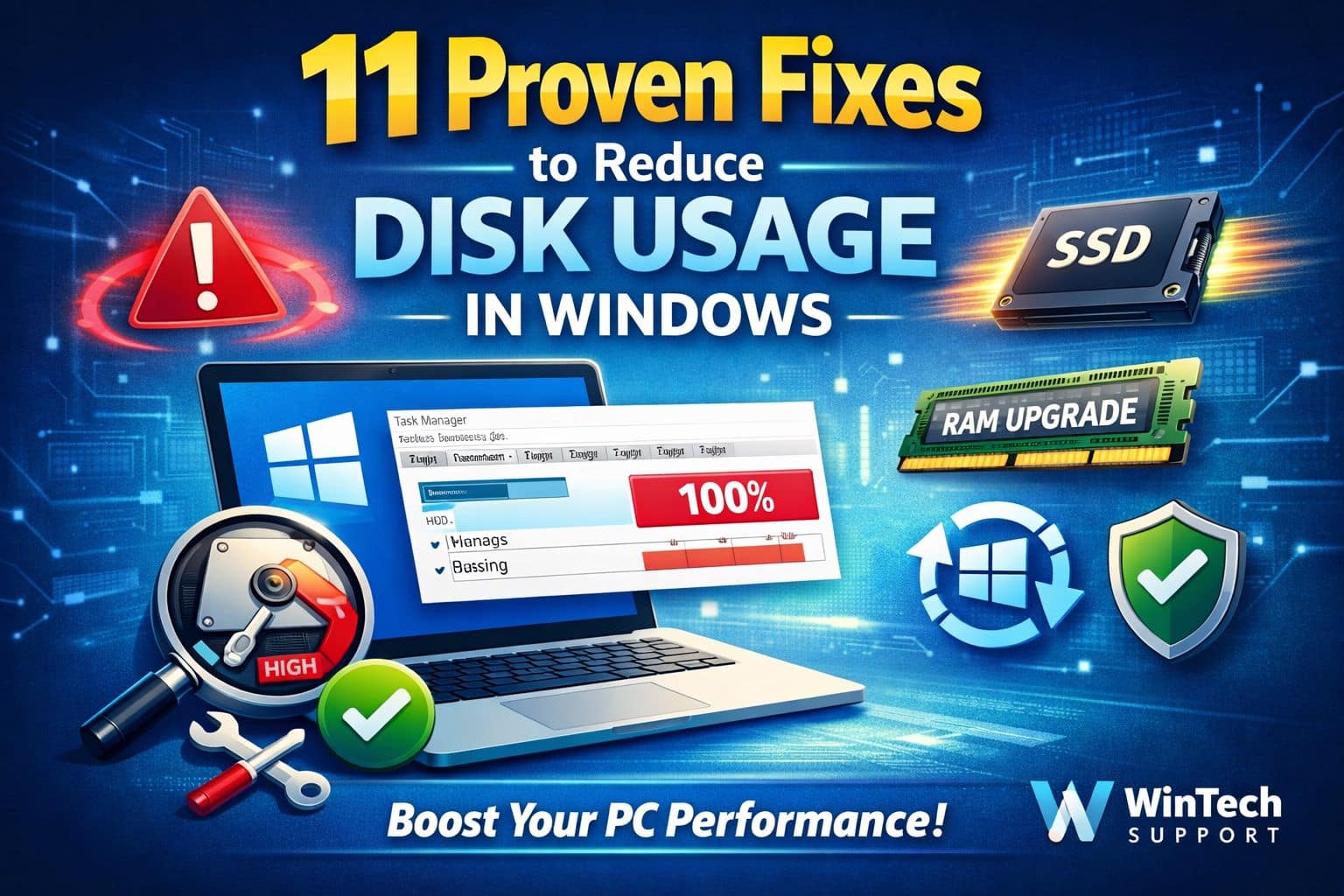
If your computer has suddenly become extremely slow and Task Manager shows Disk Usage in Windows, you’re facing one of the most common yet frustrating Windows performance issues. When disk usage stays maxed out, Windows struggles to read and write data efficiently, leading to freezing apps, long boot times, and an unresponsive system.
If you’ve noticed your system becoming slow, freezing randomly, or taking forever to open apps, the main reason could be high disk usage in Windows. When disk usage reaches 100%, your system struggles to perform even basic tasks.
This issue is very common in both Windows 10 and Windows 11 and can occur due to background processes, system services, or hardware limitations. In this detailed guide, we’ll break down the causes, solutions, and advanced fixes to reduce disk usage effectively.
This issue affects both Windows 10 and Windows 11 users and can appear without warning—even on systems that previously worked perfectly. Understanding why Disk Usage in Windows happens is the first step toward fixing slow PC performance safely and permanently.
What Does Disk Usage in Windows Mean?
Disk Usage in Windows means your hard drive or SSD is being fully utilized by system processes, background services, or applications. When the disk is overloaded, Windows cannot process tasks smoothly, causing delays, lag, and frequent freezing.
Unlike high CPU or RAM usage, disk overload directly impacts file access, making even basic actions like opening folders or launching apps painfully slow.
You can check this in Task Manager, where the disk percentage shows real-time usage.
- 0–10% → Normal
- 50–70% → Moderate
- 100% → Problematic (needs fixing)
Common Causes of Disk Usage in Windows
Several factors can trigger Disk Usage in Windows, especially as systems age or accumulate software issues. Common causes include:
- Background Services: Services like SysMain and Windows Search constantly access the disk.
- Windows Updates: Updates running in the background can temporarily spike disk usage.
- Malware or Virus: Malicious programs consume disk resources silently.
- Outdated Drivers: Old or corrupted drivers can create disk-related issues.
- Insufficient RAM: Low RAM forces Windows to use disk as virtual memory.
- Failing Hard Drive: A damaged HDD can cause continuous disk activity.
Older hard drives (HDDs) are particularly vulnerable, but SSDs can also experience this problem under certain conditions.
Signs Your PC Is Suffering from Disk Overload
You may be dealing with Disk Usage 100% on Windows if you notice:
- Extremely slow startup or shutdown
- Applications taking minutes to open
- Frequent freezing or “Not Responding” messages
- Constant disk activity light
- Task Manager showing disk usage stuck between 90–100%
Ignoring these warning signs can lead to system instability and potential data loss.
How to Check Disk Usage in Windows (Step-by-Step Guide)
Monitoring disk usage in Windows helps you identify the exact cause of the problem.
Method 1: Using Task Manager
- Press
Ctrl + Shift + Esc - Click on Processes tab
- Look at the Disk column
- Identify apps using high disk
If disk usage is constantly near 100%, you need optimization.
Method 2: Using Resource Monitor
- Press
Windows + R - Type
resmon - Go to the Disk tab
This tool gives detailed insights into which files and processes are consuming disk resources.
11 Detailed Fixes to Reduce Disk Usage in Windows
Fixing Disk Usage 100% on Windows requires identifying the root cause rather than applying random online tweaks. Below are safe, professional approaches used to resolve the issue effectively:
1. Restart Your System
A restart clears temporary processes and resets disk usage.
2. Disable SysMain (Superfetch)
SysMain preloads apps but can overload disk.
Steps:
- Press
Windows + R - Type
services.msc - Locate SysMain
- Right-click → Stop → Set Startup Type to Disabled
3. Disable Windows Search Indexing
Search indexing can consume disk resources.
Steps:
- Open Command Prompt (Admin)
- Type: net.exe stop “Windows Search”
4. Check Disk Usage via Task Manager
Identify which app is causing the issue.
- Press
Ctrl + Shift + Esc - Sort processes by Disk Usage
5. Run Disk Cleanup Tool
Remove junk files that slow down disk performance.
6. Scan for Malware
Use Windows Security or antivirus software for a full scan.
7. Update Device Drivers
Especially storage and SATA drivers.
8. Reset Virtual Memory
Improper paging settings increase disk usage.
Steps:
- System Properties → Advanced → Performance Settings
- Adjust Virtual Memory
9. Run CHKDSK Command
Fix disk errors: chkdsk /f /r
10. Disable Startup Programs
Too many startup apps increase disk load.
11. Upgrade Hardware (SSD & RAM)
If you’re still using an HDD, switching to SSD gives a massive performance boost.
How Disk Usage Affects Performance
High disk usage in Windows directly impacts:
- Boot time (system starts slowly)
- App loading speed
- Multitasking ability
- System responsiveness
When disk usage is high, your CPU and RAM cannot perform efficiently.
Advanced Troubleshooting (Expert Level)
Fix: Disable Windows Telemetry
Windows collects data in the background, increasing disk usage.
Steps:
- Press
Windows + R - Type
services.msc - Find Connected User Experiences and Telemetry
- Disable it
Fix: Turn Off Background Apps
- Go to Settings → Apps → Installed Apps
- Disable apps running in background
Fix: Optimize Drives
- Search Defragment and Optimize Drives
- Select your drive → Click Optimize
This improves disk efficiency (especially for HDD users)
Preventing Disk Usage in Windows Issues in the Future
Once Disk Usage 100% on Windows is resolved, preventive care helps keep your PC fast and reliable:
- Keep Windows and device drivers updated
- Disable unnecessary startup programs
- Monitor disk health regularly
- Maintain strong malware protection
- Upgrade to an SSD if using an old HDD
Professional system optimization ensures disk usage stays under control long-term.
Common Mistakes Users Make
Avoid these mistakes to control disk usage in Windows:
- Ignoring system updates
- Running too many apps at once
- Using outdated HDD for heavy tasks
- Not scanning for malware
- Disabling important system services incorrectly
Use Case: Laptop vs Desktop
Laptop Users:
- More affected due to lower hardware power
- Battery + heat issues increase disk usage
Desktop Users:
- Better performance
- Still affected if using HDD
SSD upgrade helps both.
Deep Dive: Why Disk Usage in Windows Always Spikes at 100%
When disk usage in Windows increases suddenly and reaches 100%, it indicates that your hard drive is overworked. This happens for a variety of reasons related to system processes and programs.
Technical Reasons:
- Ongoing read and write operations by background processes
- Overload of the paging file (virtual memory)
- Fragmented sectors on the hard disk drive
- Overuse of Windows’ indexing system
- Lack of optimization of older hardware
In simple words: Your disk is overworked because it is doing too much at once.
Security Angle (Very Important)
High disk usage in Windows can sometimes indicate:
- Malware running in background
- Crypto mining scripts
- Unauthorized software
Always scan your system if disk usage spikes suddenly.
Tools to Monitor Disk Usage in Windows
These tools help analyze disk performance:
Built-in Tools:
- Task Manager
- Resource Monitor
- Performance Monitor
Third-Party Tools:
- CrystalDiskInfo
- HWMonitor
These tools help detect disk health and usage patterns.
Expert Tips to Prevent High Disk Usage
Preventing the issue is better than fixing it
- Avoid installing unnecessary software
- Keep at least 20% disk space free
- Regularly update Windows
- Use antivirus protection
- Restart your system weekly
Why Professional Support Makes a Difference
Many users try temporary fixes found online that reduce disk usage briefly but fail to solve the underlying problem. Incorrect system changes can worsen performance or even cause data loss.
WinTech Support provides reliable online computer support with secure remote assistance. Certified technicians accurately diagnose Disk Usage in Windows issues and apply safe, long-term solutions—without risking your files or system stability.
WinTech Support is your trusted destination for solving all kinds of Windows-related issues, including disk usage in Windows, system errors, slow performance, and software troubleshooting.
Why Choose WinTech Support?
- Easy-to-follow troubleshooting guides
- Solutions for Windows 10 & Windows 11
- Beginner-friendly and expert-approved fixes
- Regularly updated content for latest issues
- Focus on real user problems and solutions
Frequently Asked Questions (FAQs)
1. Is Disk Usage in Windows dangerous?
Yes. Continuous disk overload can slow your PC, cause crashes, and increase the risk of disk failure.
2. Can malware cause Disk Usage in Windows?
Absolutely. Malware often runs hidden processes that heavily consume disk resources.
3. Does upgrading to an SSD fix disk usage problems?
In many cases, yes. SSDs handle read/write operations much faster than traditional hard drives.
4. How long does it take to fix Disk Usage 100% issues?
Most cases can be diagnosed and resolved within a single professional support session.
5. What causes high disk usage in Windows?
High disk usage in Windows is caused by background services, malware, outdated drivers, or disk errors.
6. How to fix disk usage in Windows quickly?
Disable SysMain, clean disk, scan for malware, and update drivers.
Final Thoughts
Disk Usage in Windows is a serious performance issue, but it is completely fixable when handled correctly. From repairing system files to checking disk health and removing malware, addressing the root cause restores speed and stability.
High disk usage in Windows can seriously affect your system’s performance, but it’s completely fixable. By following these 11 proven methods, you can reduce disk load, eliminate lag, and improve overall speed.
If your PC is slow, freezing, or constantly showing high disk activity, trust WinTech Support for expert diagnosis and dependable online computer support that keeps your Windows system running smoothly.