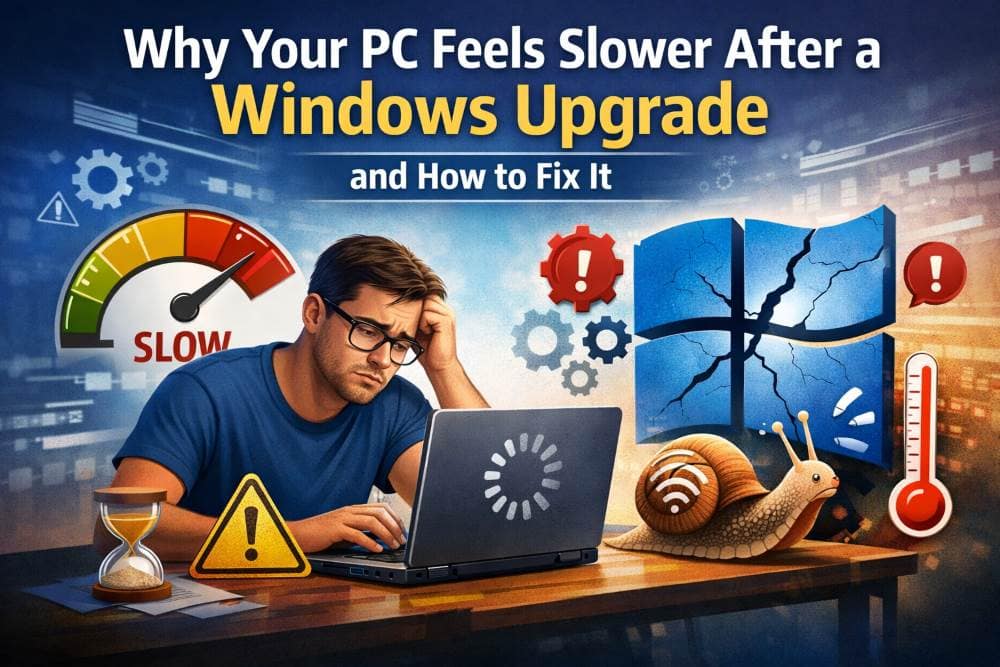
Most users experience a PC slow after the Windows 11 update, even if the PC was running perfectly before the update. Even the simplest tasks such as opening a folder, running an application, or surfing the internet take longer than usual. For some users, the computer is so slow after the Windows 11 update that it becomes frustrating to perform daily tasks.
If you are wondering “why is my PC slow after Windows 11 update” or “why is my PC slow after Windows 11 update,” you are not alone. Windows 11 updates come with new features, background processes, and graphics that can slow down the computer if it is not optimized.
This blog post will help you understand why your computer is slow after a Windows 11 update, the signs to look out for, and how to resolve the problem.
What Happens When a PC Slow After Windows 11 Update?
If PC slow after Windows 11 update, it means that the system is struggling to respond quickly. You may experience delays when performing your normal tasks. In most cases, users complain that their computers are really slow after the Windows 11 update, yet the hardware is decent.
If the computer is slow for a few days, it means that something needs to be addressed.
Why Is My PC Slow After Windows 11 Update?
Many users ask, “Why is my PC slow after the Windows 11 update?
The following are the most common and important reasons why your computer may be slow after the Windows 11 update:
1. Background Optimization Processes
After the update, Windows 11 performs activities such as system indexing, file optimization, and synchronization. These background processes consume CPU and disk resources, causing your computer to be slow after the Windows 11 update, especially in the first few days.
2. Too Many Startup Applications
Windows updates can automatically turn on startup programs. When there are too many applications set to start at boot, the computer takes longer to start and becomes sluggish.
3. Driver Compatibility Issues
Incompatible drivers are one of the most common causes of a slow computer after the Windows 11 upgrade. Incompatible graphics, storage, or chipset drivers can cause performance issues with Windows 11.
4. High CPU, RAM, or Disk Usage
Windows 11 consumes more system resources because of visual effects, widgets, and background processes. In older computers, this can cause a slowdown.
5. Insufficient Free Storage
When the system drive is almost full, Windows cannot handle temporary files effectively, causing the computer to be slow after the Windows 11 update.
Symptoms: Pc Slow After Windows 11 Update
If your computer is experiencing the following symptoms, then your computer is running slow after Windows 11 update:
- Slow startup and shutdown
- Applications opening late
- Frequent freezing or stuttering
- CPU or disk usage is very high in Task Manager, making the PC run slow.
- Delayed response to mouse or keyboard input
PC Slow After Windows 11 Update Fix (Step-by-Step)
Here are some effective and safe solutions that you can try:
1. Restart Your PC (First Step)
After updates, a restart helps complete pending processes.
Many temporary issues resolve automatically after reboot.
2. Wait for Background Processes to Finish
Give your PC some time (1–2 hours after update).
Check:
- Task Manager → CPU/Disk usage
If usage gradually decreases, the issue will resolve itself.
3. Disable Startup Programs
Steps:
- Press Ctrl + Shift + Esc
- Go to Startup Apps
- Disable unnecessary programs
This improves boot speed significantly
4. Fix High Disk Usage
Method 1: Disable SysMain
- Press Windows + R → services.msc
- Find SysMain
- Stop and disable it
Method 2: Disable Windows Search Indexing
- Disable it
- Open Services
- Find Windows Search
5. Update Drivers
Steps:
- Go to Device Manager
- Update:
- Graphics driver
- Network driver
- Storage controller
Updated drivers ensure compatibility with Windows 11.
Fix 6: Free Up Disk Space
Steps:
- Search Disk Cleanup
- Select drive (C:)
- Remove:
- Temporary files
- Windows update files
7. Adjust Visual Effects
Steps:
- Search Performance Options
- Select Adjust for best performance
Reduces animations and improves speed.
8. Check for Malware
Run a full system scan using:
- Windows Security
- Trusted antivirus software
Malware can slow down your PC significantly.
9. Increase Virtual Memory
Steps:
- Open Advanced System Settings
- Go to Performance → Settings → Advanced
- Under Virtual Memory → Change
- Set custom size (1.5x RAM recommended)
10. Uninstall Recent Updates (If Needed)
If the problem started immediately after an update:
Steps:
- Go to Settings → Windows Update → Update History
- Click Uninstall Updates
Roll back problematic updates.
11. Reset Power Settings
Run this command: powercfg -restoredefaultschemes
Fixes performance issues caused by power misconfiguration.
12. Disable Background Apps
Steps:
- Go to Settings → Apps → Installed Apps
- Disable background permissions
If your PC slow after Windows 11 update and basic fixes are not working, WinTech Support is here to help. Our experienced technicians specialize in diagnosing and fixing performance issues caused by Windows updates, driver conflicts, and system misconfigurations.
Tips to Prevent Slowdowns After Updates
- Keep drivers updated regularly
- Avoid installing unnecessary apps
- Use SSD instead of HDD
- Upgrade RAM if possible
- Maintain storage space
- Restart PC weekly
Hidden Causes of PC Slow After Windows 11 Update
Let’s go deeper into lesser-known reasons:
1. Windows Update Delivery Optimization
Windows uses your internet and system resources to share updates with other PCs.
This can:
- Slow down internet
- Increase CPU usage
- Affect performance
Fix:
- Go to Settings → Windows Update → Advanced Options → Delivery Optimization
- Turn it OFF
2. Corrupted User Profile
Sometimes updates damage user profiles.
Signs:
- Slow login
- Missing files
- Settings reset
Solution: Create a new user account.
3. Compatibility Issues with Old Software
Older apps may not work efficiently with new updates.
Examples:
- Old antivirus software
- Legacy drivers
- Unsupported programs
4. Windows Widgets & Background Features
Windows 11 widgets and background services consume resources.
Disable widgets if not needed.
5. OneDrive Sync Overload
After updates, cloud sync may restart and overload your system.
Pause syncing temporarily.
What Really Happens After a Windows 11 Update?
When you install a major Windows 11 update, your system doesn’t just restart and finish everything instantly. Instead, several hidden processes continue running in the background for hours—or even days and it cause pc slow after windows 11 update.
Post-Update System Activities:
- Rebuilding system cache
- Re-indexing files for search
- Installing driver updates
- Optimizing apps and services
- Running security scans
These processes heavily use CPU, RAM, and disk, making your PC feel unusually slow.
Important Insight:
Many users think their PC is permanently slow, but in reality, it’s often temporary post-update load.
Performance Testing Tools You Can Use
To diagnose issues more accurately:
Built-in Tools:
- Task Manager
- Resource Monitor
- Performance Monitor
What to Check:
- CPU usage above 80%
- Disk usage at 100%
- RAM usage near full
When to Seek Professional Help
While pc slow after Windows 11 update performance issues can be fixed at home, there are times when expert help is necessary.
You should seek professional help if:
- Your PC is still slow even after trying all fixes
- Frequent crashes, freezing, or blue screen errors occur
- Laptop overheats excessively or shuts down suddenly
- Battery or charging issues continue
- You suspect hardware failure (HDD/SSD, RAM, fan)
- System files are corrupted or Windows won’t boot properly
- Virus or malware cannot be removed
Why Choose Wintech Support?
Wintech Support provides:
- Advanced PC diagnostics
- Windows 11 performance optimization
- Hardware repair and upgrades
- Virus and malware removal
- Data recovery services
If basic troubleshooting doesn’t work, it’s best to contact Wintech Support for a quick and reliable solution to restore your PC’s performance.
Frequently Asked Questions (FAQs): PC Slow After Windows 11 Update
Q1. Why is my PC slow after Windows 11 update?
Your PC slow after Windows 11 update because of background optimization tasks, increased system resource usage, outdated drivers, or too many startup programs running at once. These issues are common after major updates.
Q2. Is it normal for Windows 11 to be slow after an update?
Yes, it is normal for Windows 11 to run slow for a short time after an update. The system performs indexing, syncing, and background processes. However, if the slowdown continues for several days, optimization is required.
Q3 Why is my computer really slow after Windows 11 update?
If your computer is really slow after a Windows 11 update, it could be due to incompatible drivers, insufficient RAM, low disk space, or hardware that struggles with Windows 11’s performance requirements.
Conclusion
A PC slow after Windows 11 update can feel frustrating—especially when the update was meant to improve your system, not slow it down. However, the reality is that most performance issues after updates are not permanent. They are usually caused by temporary background processes, driver mismatches, system reconfiguration, or resource limitations.
The key takeaway is simple: understand first, then fix smartly.
Instead of rushing into drastic solutions, start with basic troubleshooting—restart your system, allow background processes to complete, and monitor resource usage. From there, gradually apply more targeted fixes such as disabling startup programs, updating drivers, cleaning temporary files, and optimizing system settings. In many cases, these steps alone can restore your PC’s speed and responsiveness.